Why Emergency Communication Matters in Hotels
Hotels operate around the clock and welcome guests from around the world. Whether responding to a medical emergency, fire alarm, severe weather event, or security incident, every second matters.
While hotels invest heavily in guest services and operational efficiency, emergency communication is equally critical. An effective emergency alert system helps staff receive timely notifications, identify where an incident is occurring, and coordinate a faster response.
Modern hospitality technology is increasingly focused on improving both guest experience and operational resilience. Hospitality technology trends continue to emphasize connected systems that improve communication across hotel departments.
What Is a Hotel Emergency Alert System?
A hotel emergency alert system is a communication platform that automatically notifies designated staff when a critical event occurs. Depending on the system, alerts may be triggered by:
- Emergency phone calls
- Panic buttons
- Security events
- Fire systems
- Manual staff activation
- Integrated building systems
Unlike traditional phone systems, modern alert platforms can immediately notify multiple team members using automated calls, emails, text messages, or desktop notifications.
Why Traditional Emergency Processes Fall Short
Many hotels still rely on manual communication during emergencies. For example:
- A guest calls 911 from a room.
- Staff may not know the call has been placed.
- Managers are unaware of the room location.
- Emergency responders arrive with limited information.
These delays can affect response times when every minute is important. A modern emergency alert platform automatically identifies emergency calls and immediately alerts the appropriate personnel with room location and event details.
Key Benefits of Hotel Emergency Alert Systems
Faster Emergency Response
Automated notifications allow hotel staff to respond immediately rather than waiting for information to be passed manually. The DuVoice Emergency Alerts solution monitors outbound emergency calls in real time and can automatically notify designated personnel through multiple communication channels.
Improved Guest Safety
The faster hotel staff receive emergency information, the faster they can assist guests and direct emergency responders. This improves safety while reducing confusion during critical incidents.
Better Coordination
Emergency alerts can notify multiple departments simultaneously, including:
- Front Desk
- Security
- Engineering
- Hotel Management
This keeps everyone working from the same information.
Reduced Liability
Accurate emergency records and faster response procedures help hotels demonstrate that appropriate operational processes are in place.
Features to Look for in an Emergency Alert System
When evaluating emergency communication technology, hotels should consider solutions that provide:
Real-Time Detection
Immediate recognition of emergency events as they occur.
Automated Notifications
Alerts delivered through:
- Phone calls
- SMS
- Desktop notifications
Location Identification
Staff should know exactly where the emergency originated.
Reporting
Historical reporting allows management to review emergency events and improve future response procedures.
Integration
Emergency communication should work alongside the hotel’s broader communication infrastructure.
Integrating Emergency Alerts with Hotel Operations
Emergency communication should not operate as a standalone system. The most effective hotels integrate emergency alerts with their broader hospitality technology environment. For example:
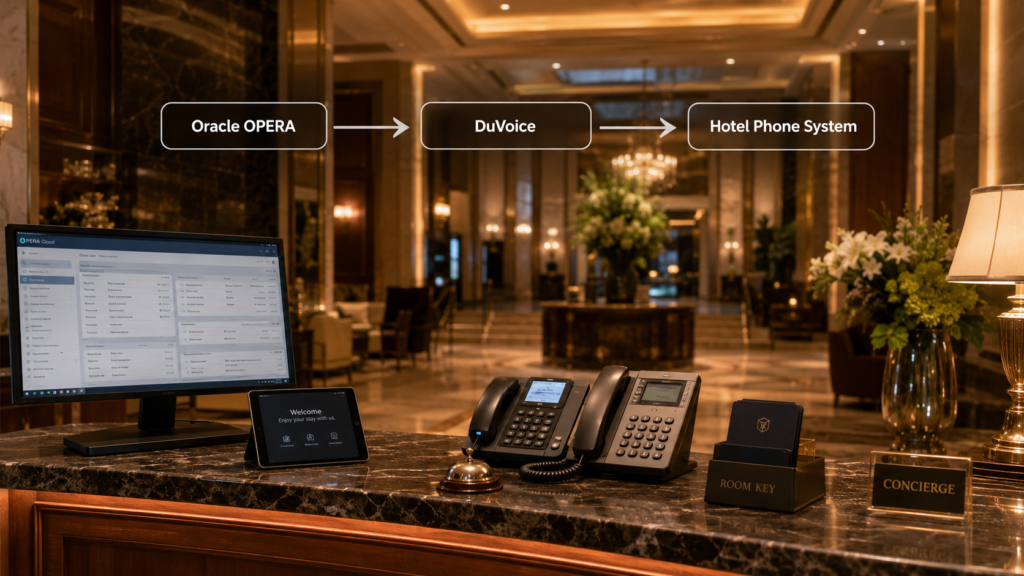
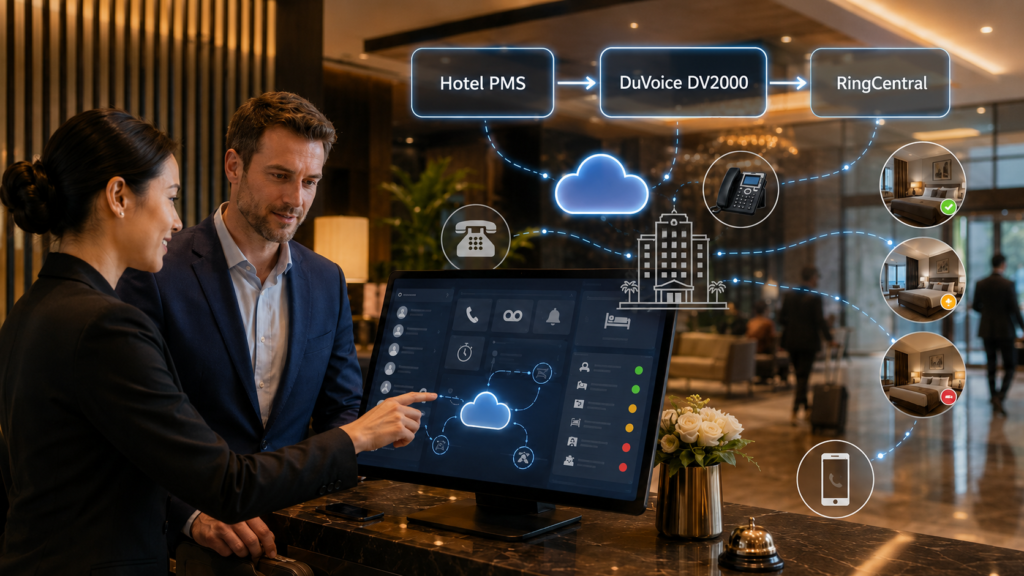
- PMS-PBX Integration helps connect communication systems with operational workflows.
- Hotel PBX Systems provide the communication infrastructure that many alert systems rely on.
- InnDesk Hospitality Management Interface centralizes operational information for hotel staff.
When these systems work together, hotels gain greater visibility and faster coordination during emergencies.
Best Practices for Hotel Emergency Preparedness
Technology is only one part of emergency planning. Hotels should also:
- Train staff regularly.
- Review emergency response procedures.
- Test notification systems.
- Keep emergency contacts current.
- Conduct emergency drills.
- Document response activities.
Industry organizations such as the American Hotel & Lodging Association provide additional guidance on hotel safety and operational best practices.
How DuVoice Helps Hotels Respond Faster
The DuVoice Emergency Alert System is designed to help hotels receive immediate notification when emergency calls occur. The platform supports:
- Real-time emergency call monitoring
- Automated phone notifications
- Email alerts
- Calling location identification
- Configurable internal emergency numbers
Because it integrates with the broader DuVoice Hospitality Communication Platform, hotels can manage emergency communication alongside wake-up calls, guest voicemail, room status updates, and other operational workflows.
Strengthen Your Hotel’s Emergency Response with DuVoice
Guest safety depends on fast, reliable communication. By implementing an integrated emergency alert system, hotels can reduce response times, improve staff coordination, and provide greater confidence for both guests and employees.
If your property is evaluating ways to modernize emergency communication, explore the DuVoice Emergency Alert System or discover the complete DuVoice Hospitality Communication Platform to see how integrated hospitality technology can improve safety and operational efficiency.
Contact us
- Email: sales@duvoice.com
- Phone: 425-250-2393 || 425-889-9790