Hotel 911 Notification Systems: How Emergency Call Alerts Work
When a guest calls 911 from a hotel room, emergency responders are not the only people who may need to know.
Hotel staff may need immediate notification so they can identify where the call originated, assist the guest, prepare for first responders, and direct emergency personnel to the correct room or area.
A hotel 911 notification system automatically detects an emergency call and alerts designated hotel staff with information about the event.
For hotels, where hundreds of rooms may share one communication environment, knowing that a 911 call occurred, and where it came from, can make a significant difference in how quickly staff can respond.
What Is a Hotel 911 Notification System?
A hotel 911 notification system monitors emergency calls made through the property’s telephone environment and notifies designated personnel when a call occurs.
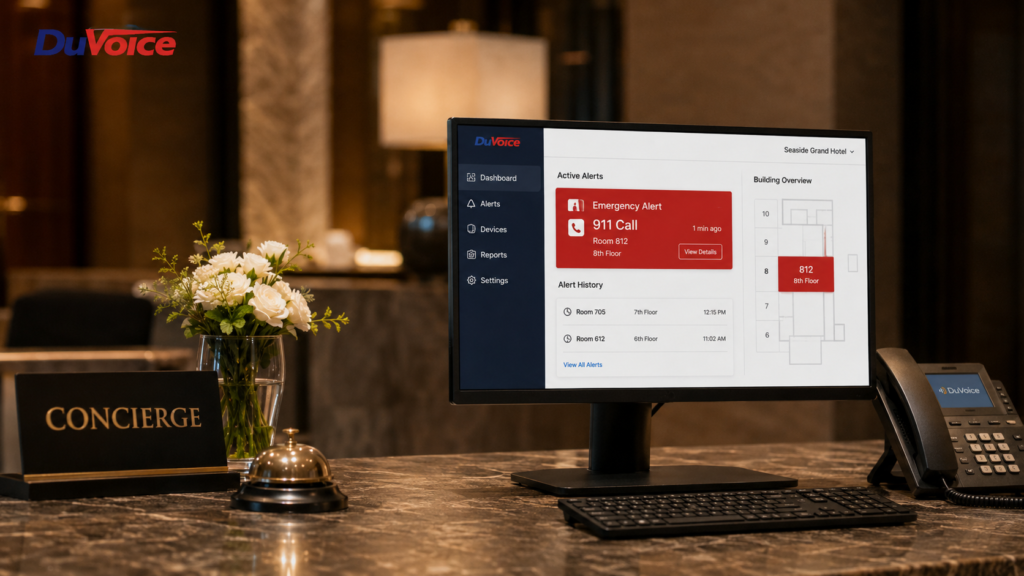
Depending on the system and configuration, an alert may identify:
- The room or extension that placed the call
- The floor or area associated with the extension
- The time of the emergency call
- The number dialed
- Other location information available within the system
Notifications may then be delivered to the front desk, security team, management, or other designated employees.
The goal is simple: make sure hotel staff know an emergency call has occurred without delaying or interfering with the guest’s call to 911.
Why Does the Hotel Need to Know When Someone Calls 911?
Imagine a guest calls 911 directly from Room 814.
Emergency responders are dispatched, but hotel employees do not know a call was placed. When responders arrive, the front desk may have no immediate information about where they need to go.
An automated notification changes that.
Hotel staff can be alerted as the emergency call occurs, giving them an opportunity to:
- Provide immediate assistance when appropriate
- Send hotel security or trained personnel
- Prepare for emergency responders
- Direct responders to the correct floor or room
- Keep entrances and elevators accessible
- Follow the hotel’s emergency-response procedures
This is especially important in large hotels, resorts, campuses, and other properties where locating one caller may otherwise take valuable time.
For a broader look at hotel emergency communications, read Why Emergency Communication Matters in Hotels.
What Do Kari’s Law and RAY BAUM’S Act Mean for Hotels?
Emergency calling is also an important consideration when designing or upgrading hotel telephone systems in the United States.
Under Kari’s Law, covered multi-line telephone systems must allow users to dial 911 directly without first dialing a prefix such as “9” to reach an outside line. The law also includes notification requirements so an appropriate on-site or centralized location can be made aware that a 911 call has occurred.
Rules implementing Section 506 of RAY BAUM’S Act address the transmission of a caller’s dispatchable location with 911 calls, to the extent technically feasible. The FCC describes dispatchable location as information that can help identify where the caller is located, which may include details such as a room or floor.
The FCC specifically identifies hotels among the environments that may use multi-line telephone systems.
Hotels should confirm the requirements that apply to their particular system, installation, and jurisdiction with qualified telecommunications and legal professionals.
What Should a Hotel Emergency Call Alert Include?
A useful emergency notification should give employees enough information to take action quickly.
Hotels evaluating a 911 alert solution should look for capabilities such as:
Real-Time Call Detection
Staff should be notified as soon as an emergency call is detected.
Location Identification
The notification should help employees identify where the call originated—such as the guest room, extension, floor, or property area when that information is available.
Multiple Notification Methods
Depending on the hotel’s procedures, alerts may need to reach employees through:
- Automated telephone calls
- SMS or text notifications
- Other supported notification methods
Multiple Recipients
A property may want alerts to reach more than one team, such as the front desk and security.
Event Records
Maintaining information about emergency events can help hotels review incidents, test their procedures, and verify that notifications are functioning correctly.
Technology should complement the hotel’s emergency-response plan—not replace it.
How DuVoice Helps With Hotel Emergency Notifications
DuVoice provides emergency alert capabilities designed to help properties identify emergency calls and quickly notify designated personnel.
In supported environments, the DuVoice Emergency Alert System can monitor outbound emergency calls in real time and trigger notifications when a 911 call is detected.
Notifications can include information such as the originating extension, floor, or room and may be delivered using automated calls, email, or SMS-based notifications depending on the deployment.
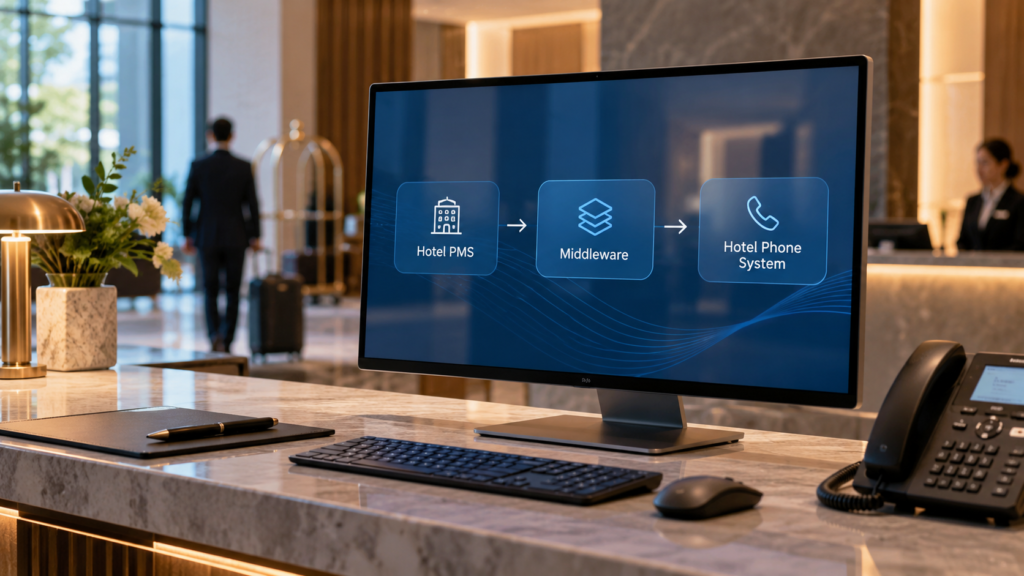
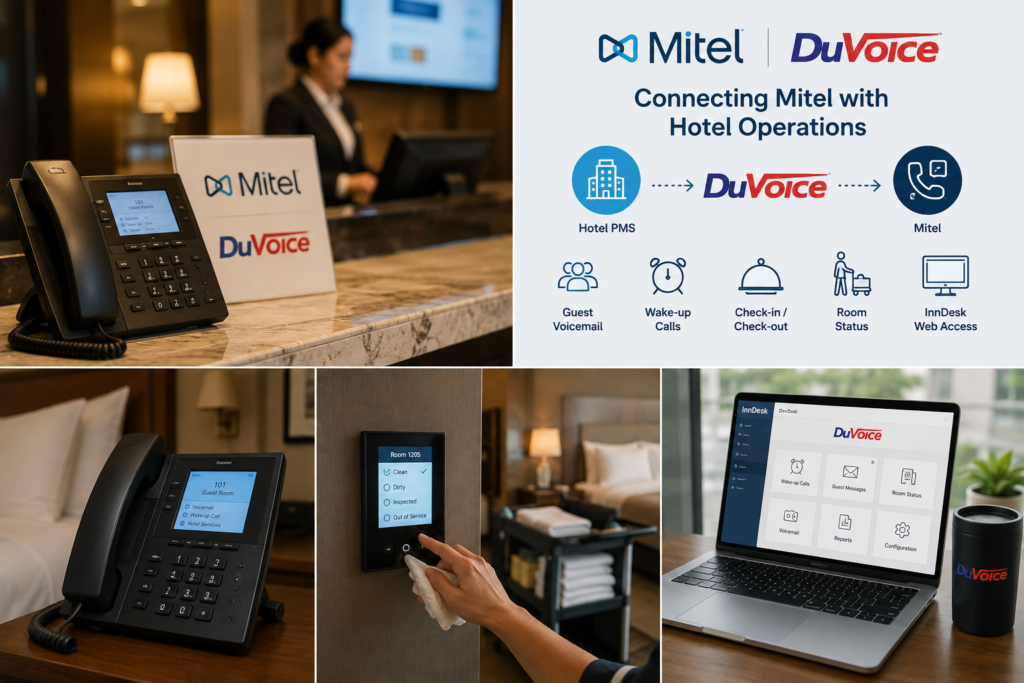
Because DuVoice specializes in hospitality communications, emergency notification can also be considered alongside other hotel communication requirements such as:
- PMS integration
- Guest voicemail
- Automated wake-up calls
- Room-status updates
- Guest communication services
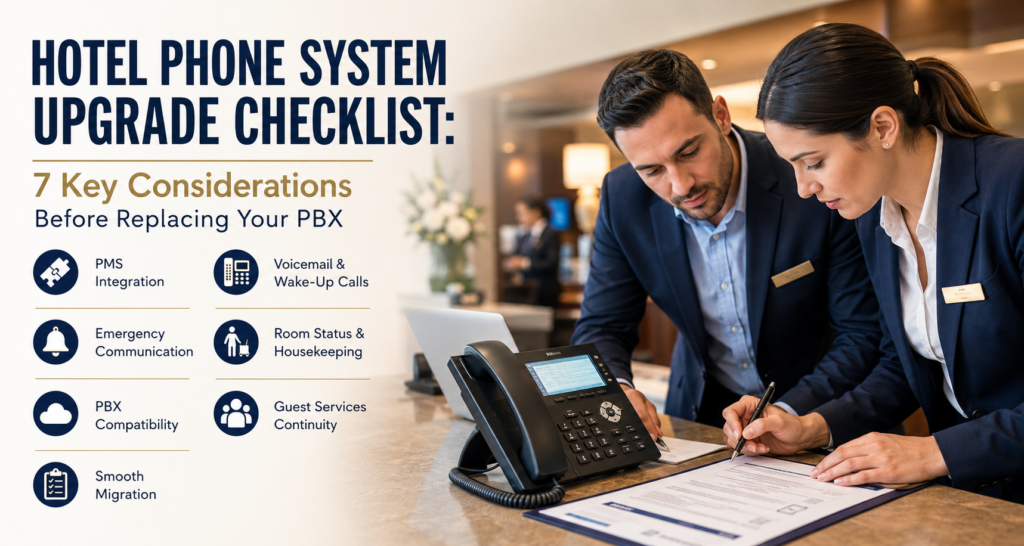
Hotels planning a larger communication-system change should also review the Hotel Phone System Upgrade Checklist.
Questions to Ask When Evaluating a Hotel 911 Notification System
Before selecting an emergency-call notification solution, ask:
- How quickly are hotel employees notified after a 911 call is placed?
- Can the system identify the originating room or extension?
- Which employees or departments can receive alerts?
- Can alerts be sent through more than one communication channel?
- What location information is available for emergency responders?
- Does the system maintain records of emergency calls and notifications?
- How is the system tested?
- What happens if the primary notification recipient is unavailable?
- How does the solution work with the hotel’s existing communication environment?
- Who is responsible for maintaining room and location information?
These questions help hotels evaluate the complete emergency workflow rather than focusing only on whether a phone can dial 911.
Give Hotel Staff the Information They Need to Respond
When a guest calls 911, hotel employees should not have to discover the emergency only when first responders arrive.
A hotel 911 notification system can immediately make designated employees aware of the call, help identify where it originated, and give staff the information they need to support the property’s emergency-response procedures.
DuVoice helps hotels add real-time emergency notification capabilities to supported communication environments while integrating them with the broader hospitality technology ecosystem.
Explore the DuVoice Emergency Alert System or contact DuVoice to discuss emergency notification requirements for your property.
Contact us
- Email: sales@duvoice.com
- Phone: 425-250-2393 || 425-889-9790